Search the content using keywords. E.g. Week 6: Beyond the classroom

Week 7: Assessment and Reporting in the Creative Arts

September 12, 2018
20th August 2018


Dance Assessment and Cross Curriculum Perspective

This week we looked at the aspect of assessment and reporting in the field of Creative Arts. In particular, we focused on dance + drama assessment and cross curriculum perspective.

“Assessment is the process of identifying, gathering and interpreting information about students’ learning. The purpose of assessment is to provide information on student achievement and progress and set the direction for ongoing teaching and learning. – General Principle”

Learning content: expression, movements


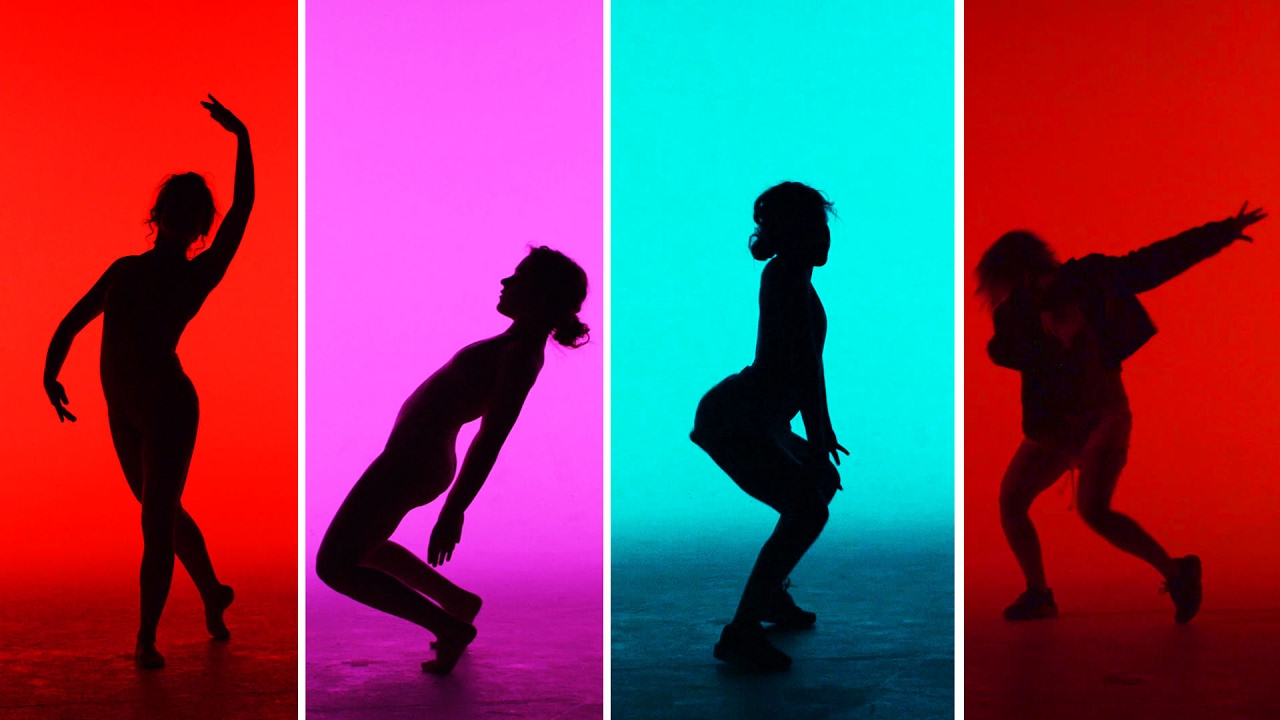
Activity one: Rain Dance
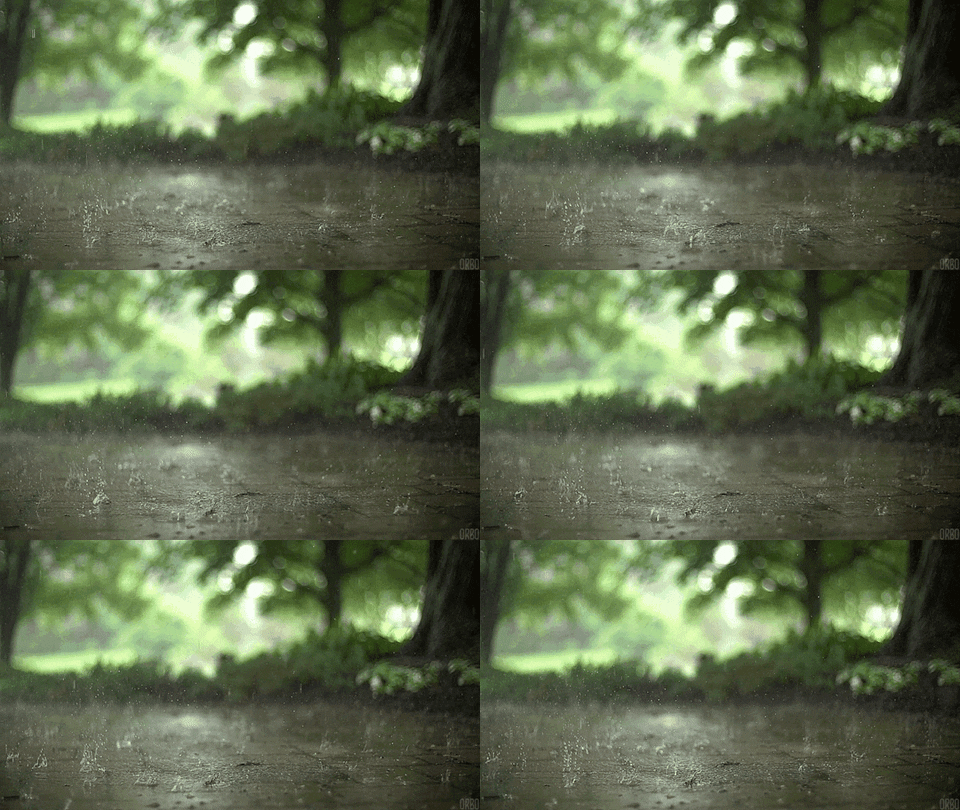
• Raindrops
• Puddles
• Walking around Puddles and
• Jumping over puddles.

This activity involved teamwork to plan and choreograph a short sequence of dance that incorporate the above mention bullet-points.


For assessment:

We talked about how we could utilised ‘peer assessment’ and ‘observation’. After we all done with our short dance performance we tried to put ‘peer assessment’ into practice.

We asked questions like:

• What movement do you learn in Rain dancing?
• Write two things you did well.
• What is the best part of your dance?
• Do you enjoy doing the dance?
(We’ve also talked about assessment in dance in more detail – see resources)


Drama Assessment and Cross Curriculum Perspective

• Drama has the unique ability to engage many different learning styles, thus facilitating connections with students and motivating most learners today.
• Drama can provide children with a meaningful purpose for writing.

Activity 2: Hero’s Journey
As a group, we created our own hero, and we planned the hero’s journey.
Mickey Mouse

A pet owner lost her ring in the pantry without her knowledge. When she realized that her ring was 
gone, she has no clue of where it might be. One day, her pet Mickey Mouse escaped its cage and hide in the pantry. While trying to find the Mickey Mouse there is another discovery. 

Cross Curriculum: English, Science


Lesson Suggestion

Dance: Baby Shark Dance

Cross Curriculum: HSIE, SCIENCE

Drama: Traffic Lights

Cross Curriculum: English, Mathematics


Reflection:

Things I learn in this week:
• Importance of dance and drama in the aspect of teaching and learning
• How dance and drama can be link to other areas of learning

Things I struggling with:
• Planning an assessment 
• Rubric (marking criteria)

Things I want to learn more about:
• How to come up with a concept (E.g. We did a class activity with 'Rain' dancing' - amazing)

Please see resources for further information.


Week 8: Assessment and Reporting Music and Visual Arts

September 12, 2018
27th August 2018
Topic: Indigenous perspectives/ priorities

This week tute's consist of:
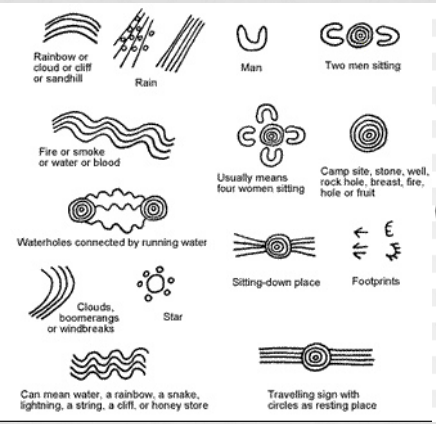
• exploration about Indigenous art representation, their symbols and meaning.
• Music: environmental

The tutorial started with the introduction of Dreamtime Stories + Indigenous Narrative.


Activity: 


  • Students views Australian Indigenous art symbols 
  • Lecturer provide their significance and meaning 
  • Students are provided with A5 sheets of paper each with the name of an 
  • Indigenous art symbol on one side 
  • Students then draw a symbol on the opposite side of the paper 
  • In combination, a story is being created using flashcards in a sequential pattern by adding words and symbols


Music: Environmental
• Environmental education can be incorporated into music within broader areas of study.

• The environment also provide inspiration for some artists. 
  • What do you notice in this tree? 
  • What might this symbol mean? 
  • What do these words mean?

Reduce, Reuse, Recycle

- elements - repeated pattern, 


Assessing an artwork activity: 

In groups of 3 or 4 develop your own story using some symbols from the sheets. 

• Make the symbols from plasticine. 
• Place on paper. 
• Splatter earthy coloured paint around shapes. 
• Present artworks to group.


Week 9: Early Childhood Dance and Drama

September 12, 2018
03/09/2018

During this week, we focus on dance and drama in Early Childhood. We talked about different kind of musical elements, dance elements and drama elements.

The importance of dance and drama:-

Dance class can enhance:

  • ·         Physical Development
  • ·         Social Awareness
  • ·         Cognitive Development
  • ·         Emotional Maturity
  • ·         Release and channel energy into creative and productive directions
  • ·         Express emotions
  • ·         Gain self- confidence
  • ·         Learn new words and concepts


Drama play can enhance:
  • ·         Language development
  • ·         Use of symbols
  • ·         Sort out fantasy and reality
  • ·         Use of social interaction skills
  • ·         And when children participate in the dramatic play they feel powerful and have a sense of relief from emotional tension


Music and Dance activities:
1. Responding to music:
  • ·         ♪Crazy Walk ♪
  • ·         ♪Dance and Fall Down ♪
  • ·         ♪Let’s Pretend ♪


    With these music playing in the background we walked around the room, and fell on the ground each time the music stops.


2. To make a body shapes of:
  • ·          High shape
  • ·          Low shape
  • ·          Round shape
  • ·          Sharp shape
  • ·          Lumpy Shape
  • ·          Flat Shape

We respond to music by moving along with the beat and rhythm. When Tehereh called out any movement she would like us to make we’d quickly try and perform it.


3. Follow the Leader

We didn’t do much on this activity, however, we’ve talked about it briefly. We’ve also talked about
how we could incorporate this kind of activity in the Early Childhood teaching.


Other activity:
We read the texts and prepare an activity based on the reading. With our team, we did a poster.


Reflection:

By the end of this lesson, I started recognised the significance of dance, music, drama in the aspect of Early Childhood and Primary Education teaching and learning.  Although I'm not a very good fan of dancing and drama - after having learned their significance and effectiveness in the process of teaching and learning - I am more open about learning more about dance and drama.


Lesson Suggestion:
Drama play

"Gas Station"

Provide the kids with cardboard boxes or chairs for cars, a long rubber hose, cash register, play money, paper towels, and water sprayer (to clean windows). Large boxes or blocks may serve as the gas pumps.
(KLAs = literacy (language development, concept development)


Week 10: Early Childhood Music and Visual Arts

September 12, 2018

10/09/2018

During this week, we explored the topic of Early Childhood Music and Visual Arts.


♪Music ♪

We started with travelling back to our childhood memories. We recalled back on any song we remember ever singing in our childhood. One of the song mentioned was ‘Twinkle Twinkle Little
Star’.

We then briefly covered the aspect of music and curriculum, music and classroom, and the importance of music in learning areas.

Notes from the tute/discussion:
  1. A music curriculum for preschool-age children should include many opportunities to explore sound through singing, moving, listening, and playing instruments.
  2. Music used in the classroom should have lasting value such as traditional children ’ s songs; folk songs; classical music; and music from a variety of cultures, styles, and time periods.
  3. Musical activities teach more than just music. Activities that require children to use their whole bodies and interact with others, while also developing musical abilities, promotes brain growth.


Music activity:
Each group have to choose one song from the provided music booklet, and perform it with the whole class.

Our group did:
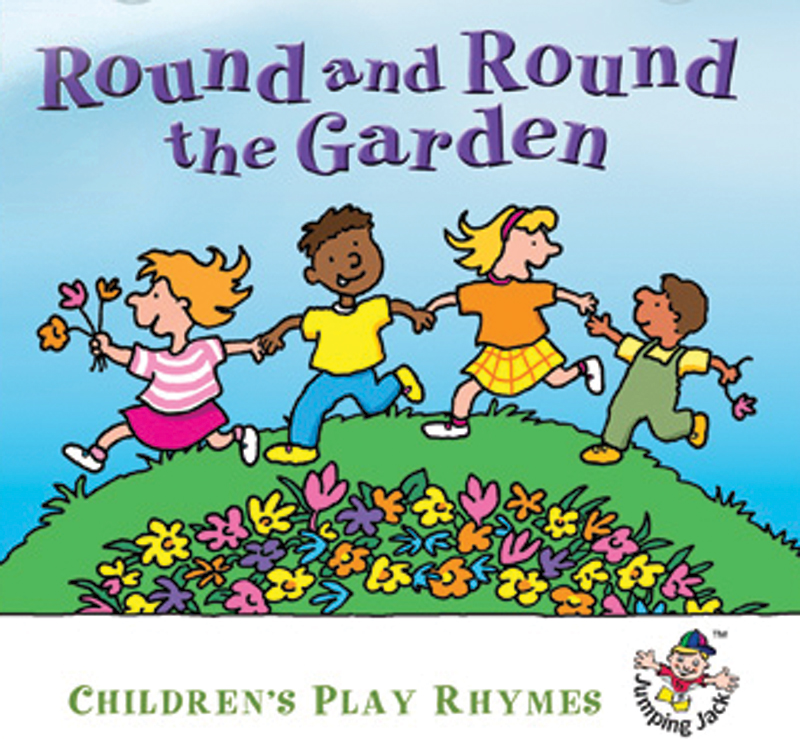
‘Round and round the garden’
        Round and round the garden
        Like a teddy bear
        One step, two step
        Tickle you there!


Visual Arts

In visual arts, we talked about:
Aesthetic Awareness -  
  •  Association with the elements: Line, Shape, Colour, Tone & Texture which comprise the subject it’s form.        
  • Associations rising from our knowledge of & experience with, the subject – the significance/meaning it holds for us personally.


We’ve talked about how important it is to start learning from a very young age. In relation to this, we’ve watched the view of ‘The Painting’ where active, lively, and energy kids gets to learn how to paint.


Lesson suggestion: ‘What’s In the Box?’


Have the students to build something out of the items from the box.


Visual Arts activity:

Canvas
As a class, we came up with a concept of ‘a child growing into adulthood’, and then portray that concept into Indigenous Arts.


Reflection:


As it is the last tutorial it is great to see everyone involved and participated in the artmaking. Coming up with concepts and putting that into a piece of canvas seem to be a challenged as first, but then people started to work together in finish the project in no time.

Teaching in Early Childhood or Primary Education is a huge responsibility.


Filtering Labels